LLM — da5004_2025T2_ET_FN
Source: da5004_2025T2_ET_FN.pdf · Academic questions: 17 · Separately counted children: 0
Provenance: Large_Language_Models/da5004_2025T2_ET_FN.pdf · SHA-256 838e6b1ea02e15a09eb284d2f3db7950d356652b030197a1e328941d9dbf50f3
Scope: Large Language Models (LLM) section (Section 6, Section Id: 64065399797) spanning from page 1 at y=237.40 to page 12 at y=426.10 (Question 154 answer). Preceding Section 5 content on page 1 (y=0 to y=232.20) and succeeding Section 7 (DL(CV)) content on page 12 (y=431.30 to y=841.89) are excluded as out of subject scope.
Questions
Question 138
Question ID: 6406531422514
Type: MCQ · Marks: 2
PDF pages: 2
Given the input string:
moonlight
And the following vocabulary of subword tokens with their corresponding log-probabilities:
| Subword | Log-Probability (base e) |
|---|---|
| moon | -0.4 |
| light | -1.0 |
| moonlight | -1.8 |
| moo | -0.3 |
| nlight | -0.6 |
| n | -2.0 |
| li | -0.5 |
| ght | -0.5 |
Using the Viterbi algorithm (as used in the SentencePiece tokenizer), determine the most probable tokenization of the input string. The probability of a tokenized sequence is the sum of the log-probabilities of the selected subwords. Only subwords from the vocabulary may be used.
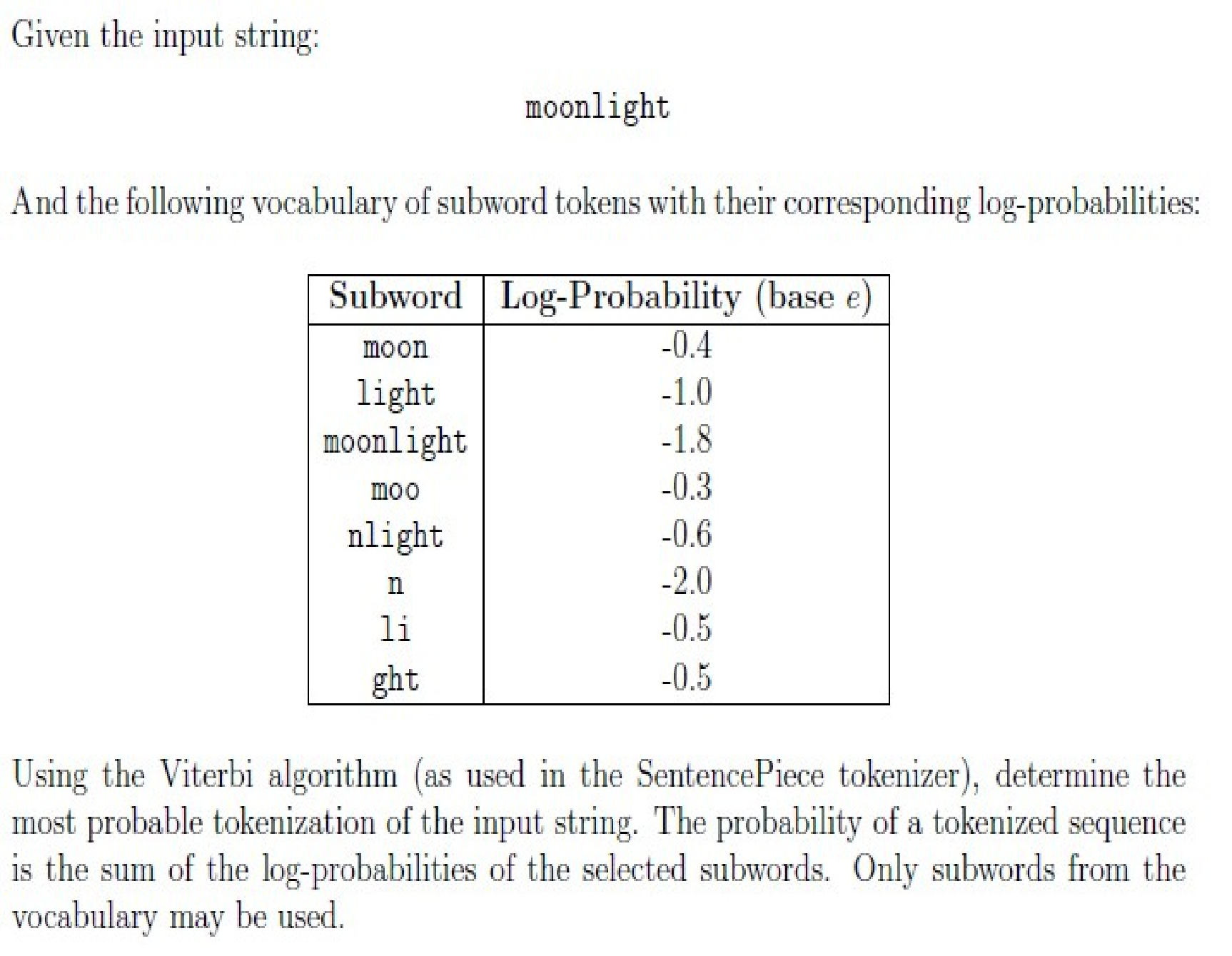
Figure 1. Input string, subword vocabulary log-probabilities table, and Viterbi tokenization problem description
Options
A.
[moonlight]
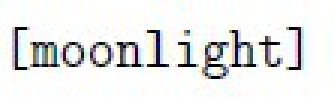
Figure 2. Option A token sequence [moonlight]
Source option ID: 6406534756305
Label added for presentation.
B.
[moo, nlight]
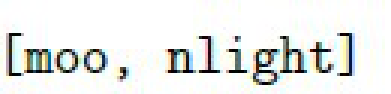
Figure 3. Option B token sequence [noo, nlight]
Source option ID: 6406534756306
Label added for presentation.
C.
[moon, light]

Figure 4. Option C token sequence [moon, light]
Source option ID: 6406534756307
Label added for presentation.
D.
[moon, li, ght]

Figure 5. Option D token sequence [moon, li, ght]
Source option ID: 6406534756308
Label added for presentation.
Correct answer: [moo, nlight]
Source evidence: [{"page": 2, "bbox": [119.02, 707.13, 131.02, 719.13], "type": "green source option", "detail": "Green marked option 6406534756306 (B)"}]
Question 139
Question ID: 6406531422515
Type: MCQ · Marks: 2
PDF pages: 3
Match the given attention masks with their corresponding variants of attention mechanisms. In each figure, the colored cells indicate positions where a query token (\(Q_i\)) attends to a key token (\(K_j\)), while the white cells represent positions that are not attended. Choose the correct option.
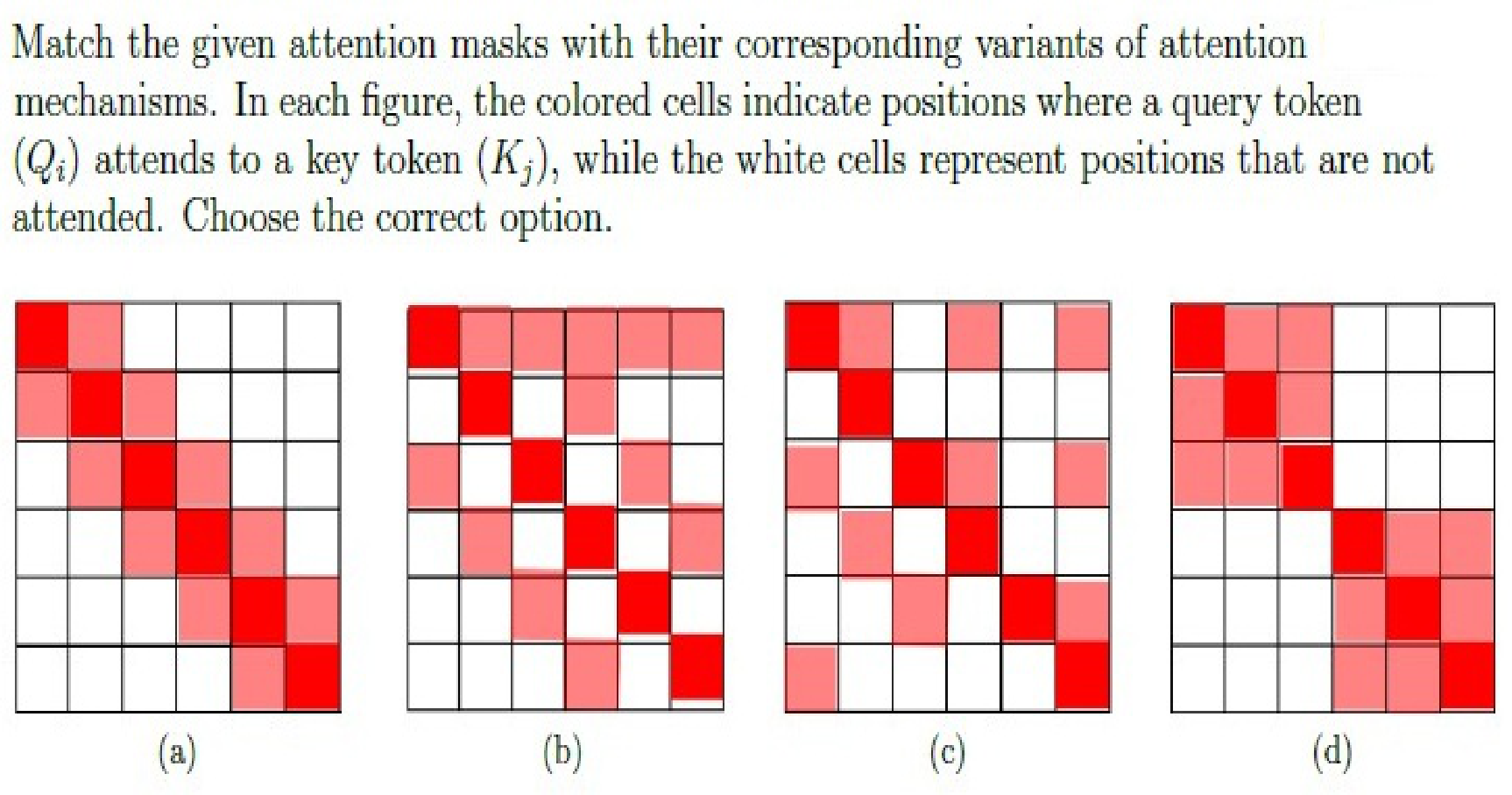
Figure 6. Attention mask diagrams (a), (b), (c), (d) for attention pattern matching
Options
A.
(a) : Random Local Attention,
(b) : Strided Local Attention,
(c) : Sparse Block Attention,
(d) : Local + Global Attention
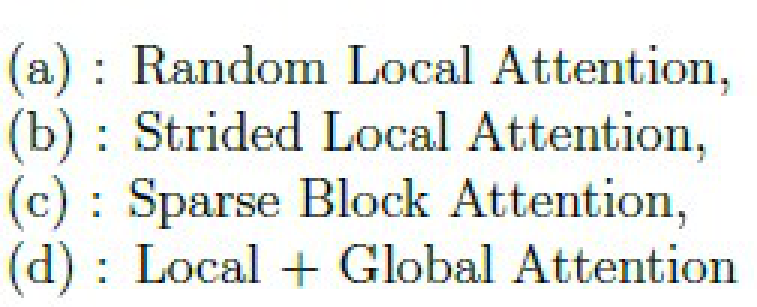
Figure 7. Option A attention mechanism matching list
Source option ID: 6406534756309
Label added for presentation.
B.
(a) : Strided Local Attention,
(b) : Local + Global Attention,
(c) : Random Local Attention,
(d) : Sparse Block Attention
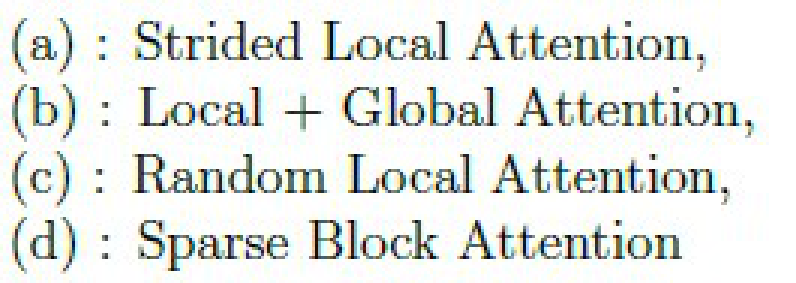
Figure 8. Option B attention mechanism matching list
Source option ID: 6406534756310
Label added for presentation.
C.
(a) : Strided Local Attention,
(b) : Random Local Attention,
(c) : Local + Global Attention,
(d) : Sparse Block Attention
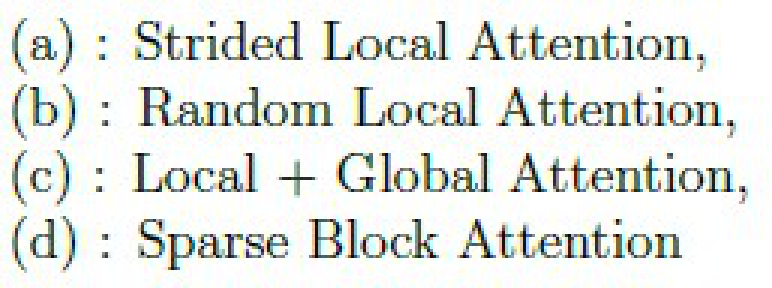
Figure 9. Option C attention mechanism matching list
Source option ID: 6406534756311
Label added for presentation.
D.
(a) : Sparse Block Attention,
(b) : Local + Global Attention,
(c) : Strided Local Attention,
(d) : Random Local Attention
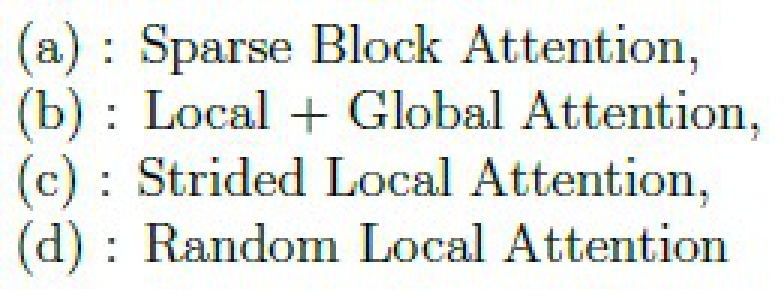
Figure 10. Option D attention mechanism matching list
Source option ID: 6406534756312
Label added for presentation.
Correct answer: (a) : Strided Local Attention,
(b) : Local + Global Attention,
(c) : Random Local Attention,
(d) : Sparse Block Attention
Source evidence: [{"page": 3, "bbox": [119.02, 506.43, 131.02, 518.43], "type": "green source option", "detail": "Green marked option 6406534756310 (B)"}]
Question 140
Question ID: 6406531422516
Type: MSQ · Marks: 3
PDF pages: 4
Which of the following statements about subword tokenizers (e.g., Byte Pair Encoding,
SentencePiece) is true?
Options
A.
They always split words into individual characters.
Source option ID: 6406534756313
Label added for presentation.
B.
They help handle rare words by breaking them into smaller units.
Source option ID: 6406534756314
Label added for presentation.
C.
They require the vocabulary to contain every possible word in the language.
Source option ID: 6406534756315
Label added for presentation.
D.
They can reduce the overall vocabulary size compared to word-level
tokenizers.
Source option ID: 6406534756316
Label added for presentation.
Correct answer: They help handle rare words by breaking them into smaller units.; They can reduce the overall vocabulary size compared to word-level
tokenizers.
Source evidence: [{"page": 4, "bbox": [119.02, 152.06, 131.02, 164.06], "type": "green source option", "detail": "Green marked option 6406534756314 (B)"}, {"page": 4, "bbox": [119.02, 193.7, 131.02, 205.7], "type": "green source option", "detail": "Green marked option 6406534756316 (D)"}]
Question 141
Question ID: 6406531422517
Type: MSQ · Marks: 3
PDF pages: 4
A GPT-based model is fine-tuned for story generation. During evaluation, you test different
decoding strategies on the same prompt:
- Method A: Every run produces the exact same story, even when executed multiple times.
-
Method B: The story changes slightly in each run, but overall structure and key events remain
similar. -
Method C: The story is wildly different each time, sometimes even changing the genre.
Based on the observations, select the most likely decoding strategies for each method:
Options
A.
Method A: Greedy decoding
Source option ID: 6406534756317
Label added for presentation.
B.
Method A: Top-K sampling with K = 50
Source option ID: 6406534756318
Label added for presentation.
C.
Method B: Top-P sampling with p = 0.9
Source option ID: 6406534756319
Label added for presentation.
D.
Method C: Top-P sampling with p = 0.5 and high temperature T = 1.5
Source option ID: 6406534756320
Label added for presentation.
E.
Method C: Beam search with K = 5
Source option ID: 6406534756321
Label added for presentation.
Correct answer: Method A: Greedy decoding; Method B: Top-P sampling with p = 0.9; Method C: Top-P sampling with p = 0.5 and high temperature T = 1.5
Source evidence: [{"page": 4, "bbox": [119.02, 481.82, 131.02, 493.82], "type": "green source option", "detail": "Green marked option 6406534756317 (A)"}, {"page": 4, "bbox": [119.02, 523.49, 131.02, 535.49], "type": "green source option", "detail": "Green marked option 6406534756319 (C)"}, {"page": 4, "bbox": [119.02, 544.34, 131.02, 556.34], "type": "green source option", "detail": "Green marked option 6406534756320 (D)"}]
Question 142
Question ID: 6406531422518
Type: MSQ · Marks: 3
PDF pages: 4
Which of the following are valid design choices when building a transformer-based language
model?
Options
A.
Number of transformer layers
Source option ID: 6406534756322
Label added for presentation.
B.
Learning rate schedule
Source option ID: 6406534756323
Label added for presentation.
C.
Font style of the source code
Source option ID: 6406534756324
Label added for presentation.
D.
Vocabulary size
Source option ID: 6406534756325
Label added for presentation.
E.
Type of normalization (e.g., LayerNorm)
Source option ID: 6406534756326
Label added for presentation.
Correct answer: Number of transformer layers; Learning rate schedule; Vocabulary size; Type of normalization (e.g., LayerNorm)
Source evidence: [{"page": 4, "bbox": [119.02, 722.75, 131.02, 734.75], "type": "green source option", "detail": "Green marked option 6406534756322 (A)"}, {"page": 4, "bbox": [119.02, 743.57, 131.02, 755.57], "type": "green source option", "detail": "Green marked option 6406534756323 (B)"}, {"page": 4, "bbox": [119.02, 785.21, 131.02, 797.21], "type": "green source option", "detail": "Green marked option 6406534756325 (D)"}, {"page": 4, "bbox": [119.02, 806.03, 131.02, 818.03], "type": "green source option", "detail": "Green marked option 6406534756326 (E)"}]
Question 143
Question ID: 6406531422519
Type: MSQ · Marks: 3
PDF pages: 5
Which of the following statements about Top-k and Nucleus (Top-p) sampling are correct?
Options
A.
Top-k keeps only the k most probable tokens before sampling.
Source option ID: 6406534756327
Label added for presentation.
B.
Top-p dynamically chooses the smallest set of tokens whose cumulative
probability exceeds p.
Source option ID: 6406534756328
Label added for presentation.
C.
Top-k is always a subset of Top-p.
Source option ID: 6406534756329
Label added for presentation.
D.
Top-p always has a fixed number of candidate tokens.
Source option ID: 6406534756330
Label added for presentation.
Correct answer: Top-k keeps only the k most probable tokens before sampling.; Top-p dynamically chooses the smallest set of tokens whose cumulative
probability exceeds p.
Source evidence: [{"page": 5, "bbox": [119.02, 134.24, 131.02, 146.24], "type": "green source option", "detail": "Green marked option 6406534756327 (A)"}, {"page": 5, "bbox": [119.02, 155.06, 131.02, 167.06], "type": "green source option", "detail": "Green marked option 6406534756328 (B)"}]
Question 144
Question ID: 6406531422520
Type: MSQ · Marks: 3
PDF pages: 5
Which of the following preprocessing steps are commonly required when preparing data for
transformer models like BERT?
Options
A.
Lowercasing text (for uncased models)
Source option ID: 6406534756331
Label added for presentation.
B.
Splitting into subword units using BPE or WordPiece
Source option ID: 6406534756332
Label added for presentation.
C.
Removing all punctuation marks
Source option ID: 6406534756333
Label added for presentation.
D.
Adding position indices for each token
Source option ID: 6406534756334
Label added for presentation.
Correct answer: Lowercasing text (for uncased models); Splitting into subword units using BPE or WordPiece; Adding position indices for each token
Source evidence: [{"page": 5, "bbox": [119.02, 370.58, 131.02, 382.58], "type": "green source option", "detail": "Green marked option 6406534756331 (A)"}, {"page": 5, "bbox": [119.02, 391.4, 131.02, 403.4], "type": "green source option", "detail": "Green marked option 6406534756332 (B)"}, {"page": 5, "bbox": [119.02, 433.04, 131.02, 445.04], "type": "green source option", "detail": "Green marked option 6406534756334 (D)"}]
Question 145
Question ID: 6406531422521
Type: SA · Marks: 3
PDF pages: 5, 6
Suppose a language model outputs the following logits for a vocabulary of size 4:
| Token | Logit |
|---|---|
| cat | 1.5 |
| sat | 0.5 |
| on | 0.0 |
| mat | -0.5 |
You apply Low Temperature Sampling with temperature \(T = 2.0\). After applying the softmax on the temperature-scaled logits, what is the probability assigned to the token “cat”? (Give your answer up to 2 decimal places)
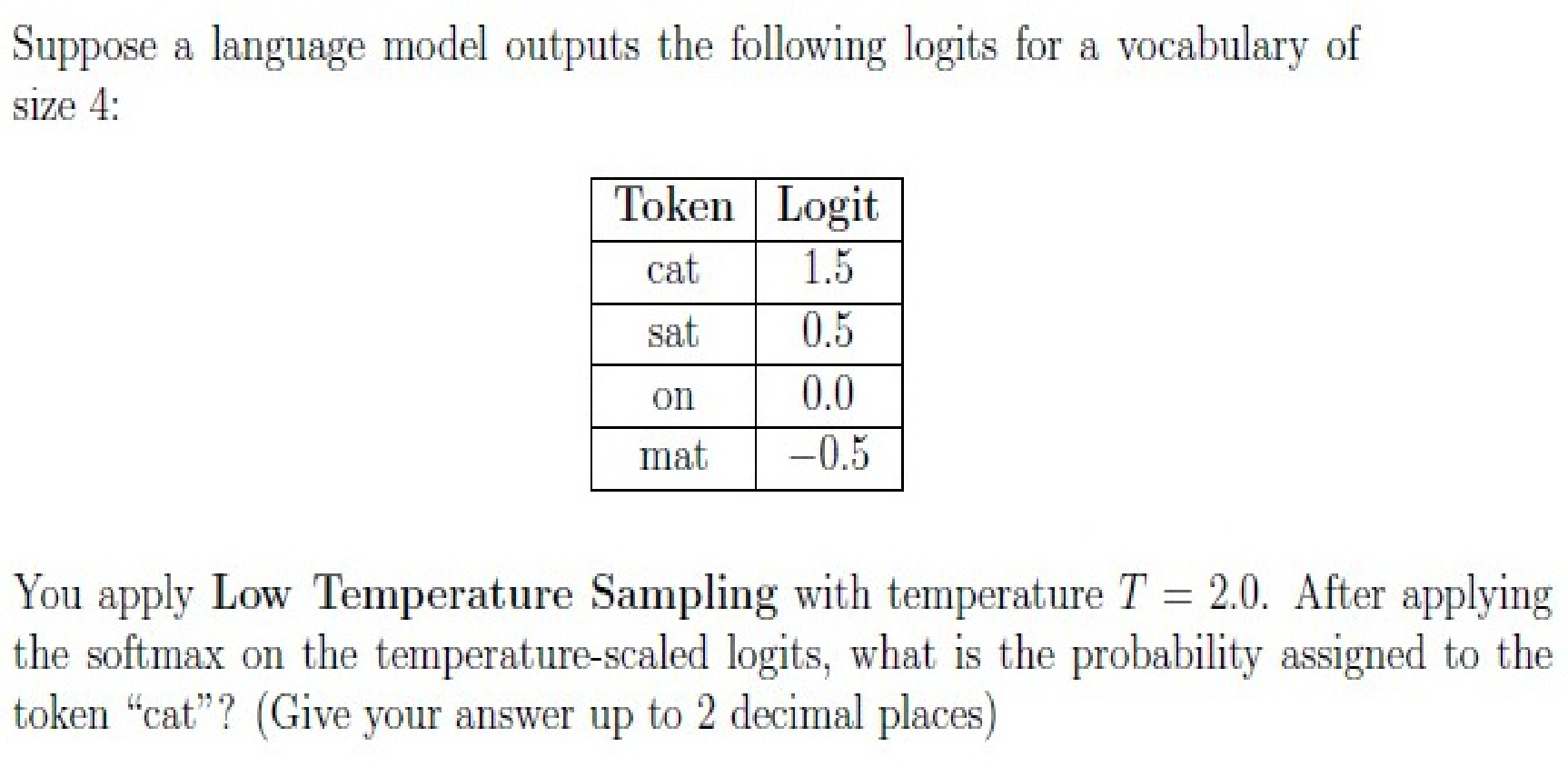
Figure 11. Vocabulary logits table and low temperature sampling setup for token cat
Correct answer: 0.38 to 0.44
Source evidence: [{"page": 6, "bbox": [22.87, 105.0, 160.0, 130.0], "type": "explicit field", "detail": "Official source Range answer: 0.38 to 0.44"}]
Shared context 146 to 147
Question ID: 6406531422522
Portal container ID: 6406531422522
Type: Comprehension
PDF pages: 6
A vocabulary \(V = \{\text{tea}, \text{you}, \text{enjoy}, \text{often}\}\) is associated with the following embedding matrix:
Words are indexed in the order shown above: “tea” (index 0), “you” (1), “enjoy” (2), and “often” (3). No positional encodings are used.
The parameters of the attention layer are:
For the input sequence “you enjoy tea often”. The computed attention matrix \(A = \text{softmax}\left(\frac{Q K^T}{\sqrt{d_k}}\right)\) is given as:
Answer the given subquestions. If you believe the information is insufficient, enter -1 as your answer.
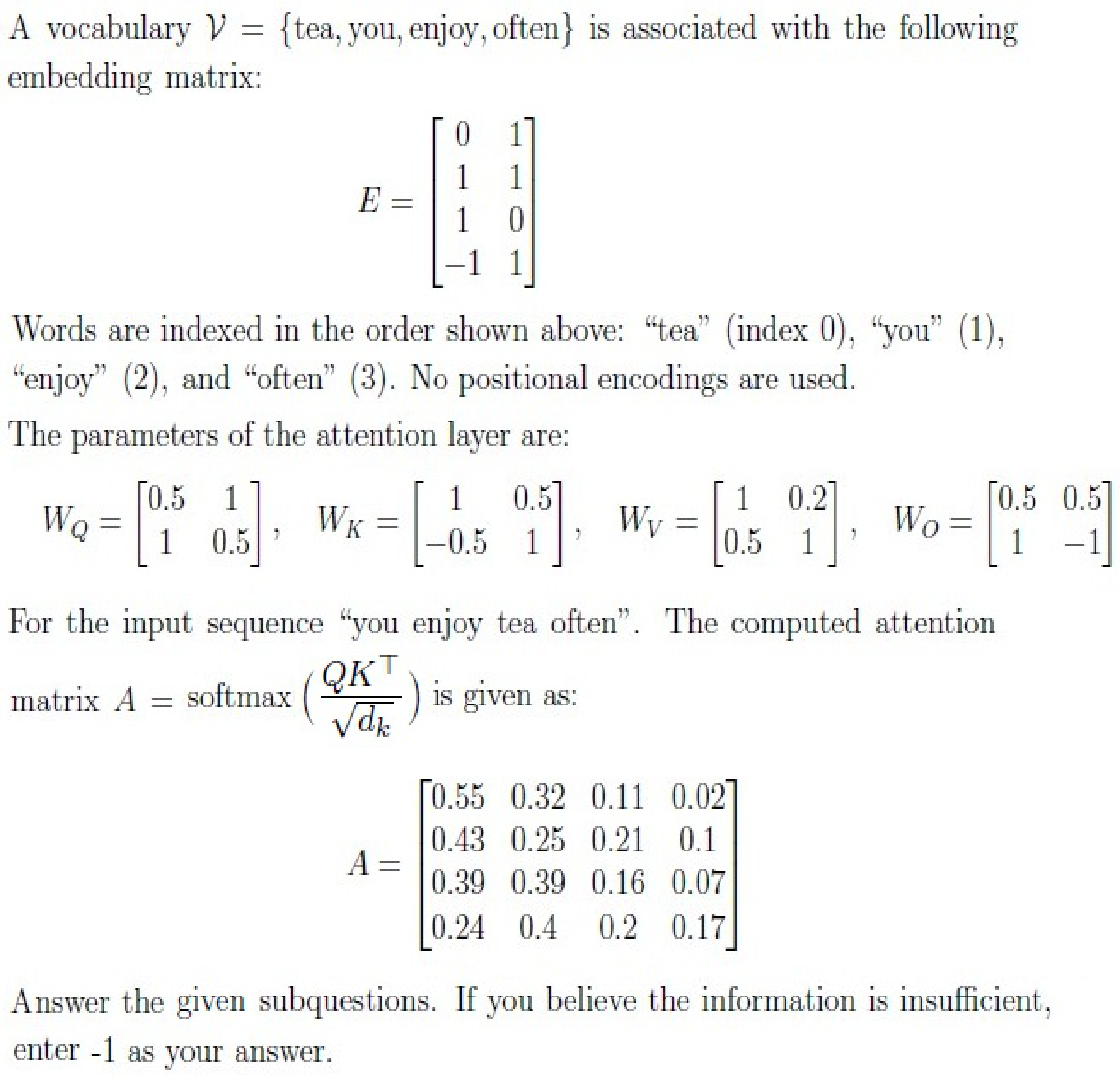
Figure 12. Vocabulary embeddings, projection matrices W_Q, W_K, W_V, W_O, and computed attention matrix A
Question 146
Question ID: 6406531422523
Portal container ID: 6406531422522
Type: SA · Marks: 3
PDF pages: 6, 7
Shared context: ctx-146-147
For the input “you enjoy tea often”, compute the final representation of the word “tea” after the
attention layer (i.e., after applying WQ, WK, WV , attention weights, and WO). Enter the sum of the
elements in the resulting vector.
Correct answer: 0.98 to 1.06
Source evidence: [{"page": 7, "bbox": [22.87, 180.0, 160.0, 205.0], "type": "explicit field", "detail": "Official source Range answer: 0.98 to 1.06"}]
Question 147
Question ID: 6406531422524
Portal container ID: 6406531422522
Type: SA · Marks: 2
PDF pages: 7
Shared context: ctx-146-147
Suppose the input sentence is “tea you enjoy often”. Using the same matrices and processing
method, what is the attention score (i.e., softmax entry from A) for the query word “tea” attending
to key word “often”?
Correct answer: 0.04 to 0.10
Source evidence: [{"page": 7, "bbox": [22.87, 420.0, 160.0, 445.0], "type": "explicit field", "detail": "Official source Range answer: 0.04 to 0.10"}]
Shared context 148 to 150
Question ID: 6406531422530
Portal container ID: 6406531422530
Type: Comprehension
PDF pages: 7, 8
Suppose we have context length \(T = 30\) and the number of blocks \(n = 5\) for the block attention mechanism.
The masking matrix \(M\) is defined as:
where \(i\) is row indices and \(j\) is columns indexes both starting from 0.
Here, \(\pi\) is a permutation of \(\{0, 1, \dots, (n-1)\}\), which determines the allowed query-key block pairs. Specifically, if a query token \(i\) lies in block \(r = \lfloor i/6 \rfloor\), then it can attend only to key tokens in block \(\pi(r)\).
Equivalently, if we partition queries and keys into blocks:
then block \(Q_r\) attends only to block \(K_{\pi(r)}\).
This block-restricted attention reduces computation by limiting interactions to the query-key block pairs specified by \(\pi\).
Answer the given sub-questions using the attention mask \(M \in \{0, 1\}^{T \times T}\) image, where black squares represent entries equal to 1 and white squares represent entries equal to 0.
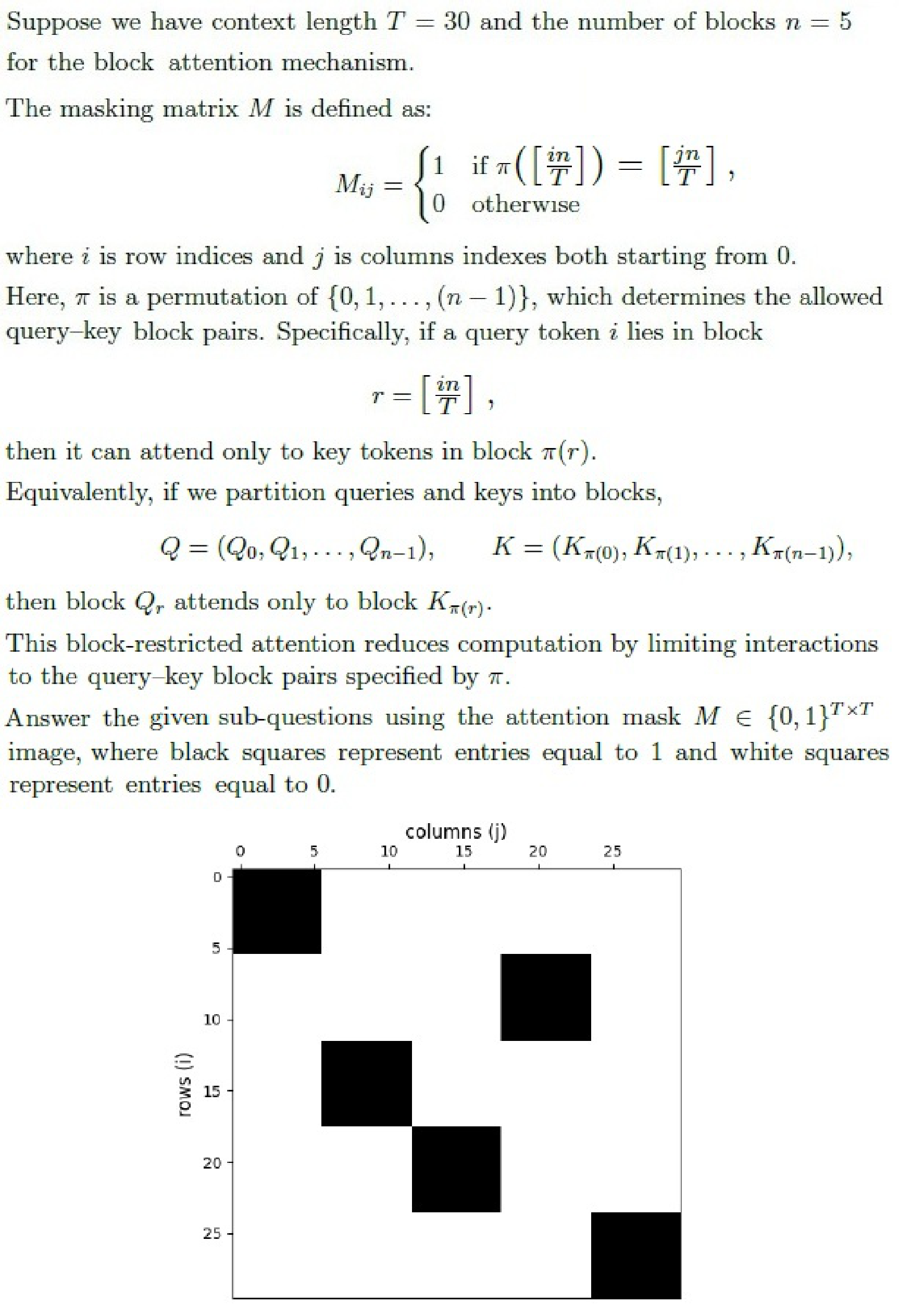
Figure 13. Block attention mechanism definition, permutation matrix, and attention mask M image
Question 148
Question ID: 6406531422531
Portal container ID: 6406531422530
Type: MCQ · Marks: 2
PDF pages: 8, 9
Shared context: ctx-148-150
Choose the correct representation of \(\pi\) for the given mask image.
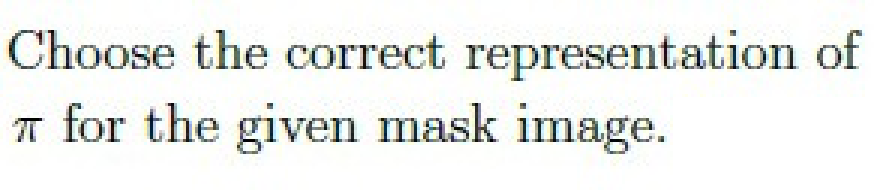
Figure 14. Prompt to choose correct representation of permutation pi for given mask image
Options
A.
\(\pi = (0, 2, 3, 1, 4)\)

Figure 15. Option A permutation mapping
Source option ID: 6406534756348
Label added for presentation.
B.
\(\pi = (0, 6, 12, 18, 24)\)

Figure 16. Option B permutation mapping
Source option ID: 6406534756349
Label added for presentation.
C.
\(\pi = (0, 3, 1, 2, 4)\)

Figure 17. Option C permutation mapping
Source option ID: 6406534756350
Label added for presentation.
D.
All of these
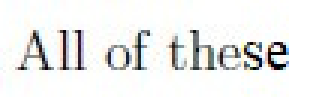
Figure 18. Option D permutation mapping
Source option ID: 6406534756351
Label added for presentation.
Correct answer: \(\pi = (0, 3, 1, 2, 4)\)
Source evidence: [{"page": 9, "bbox": [119.02, 111.15, 131.02, 123.15], "type": "green source option", "detail": "Green marked option 6406534756350 (C)"}]
Question 149
Question ID: 6406531422532
Portal container ID: 6406531422530
Type: SA · Marks: 1
PDF pages: 9
Shared context: ctx-148-150
How many permutations of \(\pi\) are possible for \(n = 5\)?
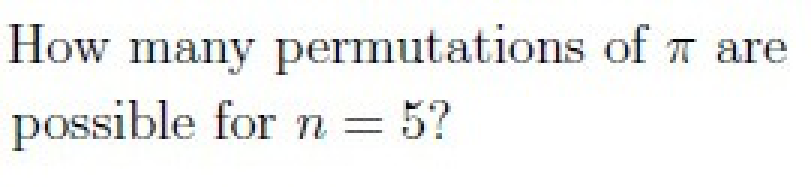
Figure 19. Prompt for total number of permutations of pi for n = 5
Correct answer: 120
Source evidence: [{"page": 9, "bbox": [22.87, 410.0, 100.0, 435.0], "type": "explicit field", "detail": "Official source Equal answer: 120"}]
Question 150
Question ID: 6406531422533
Portal container ID: 6406531422530
Type: SA · Marks: 2
PDF pages: 9
Shared context: ctx-148-150
What percentage of entries in the attention matrix are zero (i.e., the sparsity)?
Correct answer: 80
Source evidence: [{"page": 9, "bbox": [22.87, 610.0, 100.0, 635.0], "type": "explicit field", "detail": "Official source Equal answer: 80"}]
Shared context 151 to 154
Question ID: 6406531422525
Portal container ID: 6406531422525
Type: Comprehension
PDF pages: 9, 10
Consider the short sentence:
“large language models are cool”
A transformer processes this sequence using the naive relative positional embedding method. The transformer’s embedding dimension is \(d_{\text{model}} = 4\), and the number of tokens is \(T = 5\). We use zero-based indexing for token positions:
0: large, 1: language, 2: models, 3: are, 4: cool
Note: In this context, the relative position (\(k\)) between two tokens is:
Relative position = \(j - i\)
rows = current token \(i\), cols = other token \(j\)
Positive values mean the other token is after the current token, negative values mean it is before, and 0 means it is the same token.
- Token embeddings (rows correspond to tokens in order):
Denote the \(i\)-th row by \(x_i\).
- Positional embedding definition: For a relative position \(k \in \mathbb{Z}\),
Based on the above data, answer the given subquestions.
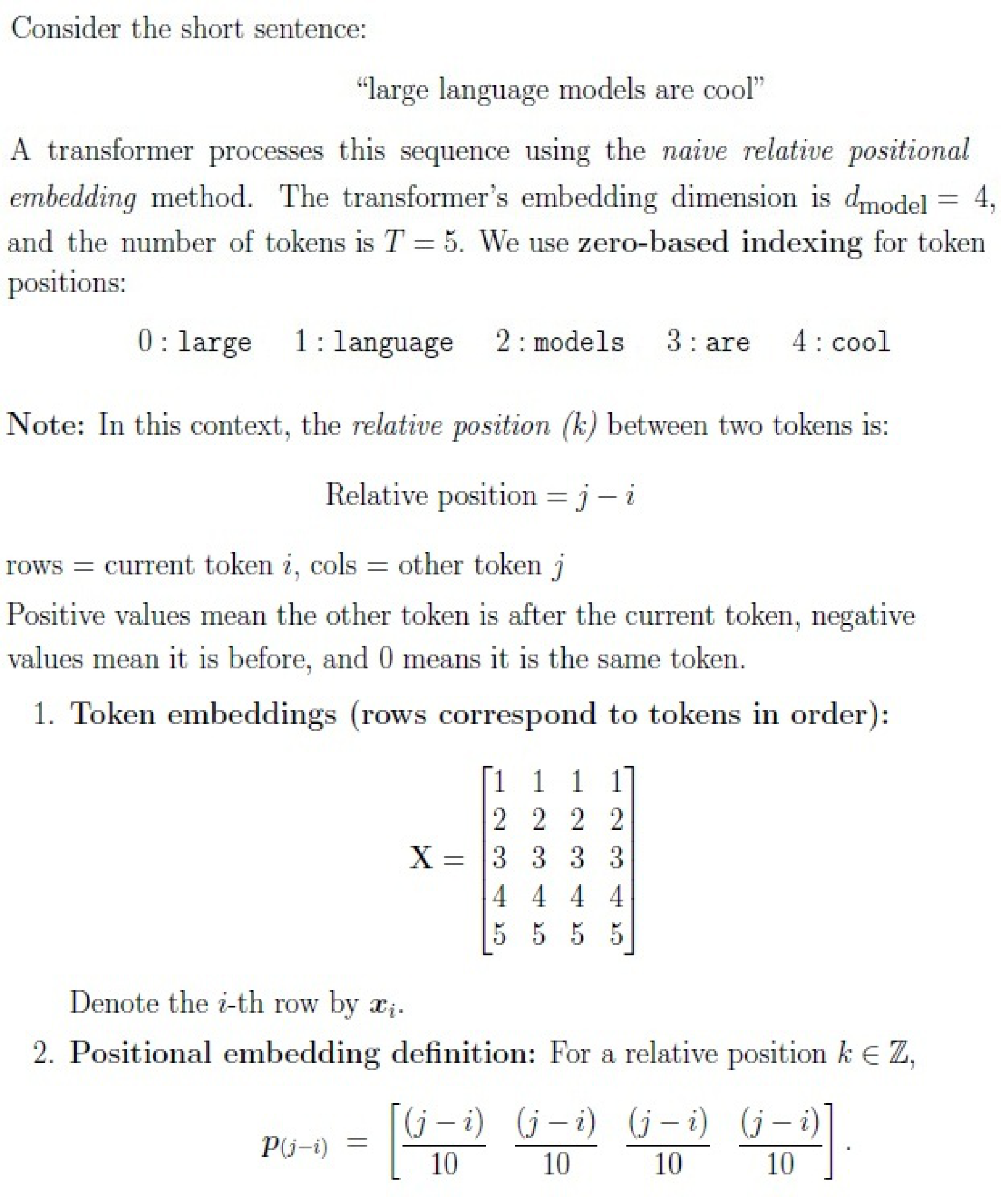
Figure 20. Relative positional embedding definition, token embeddings matrix X, and relative position vector formula
Question 151
Question ID: 6406531422526
Portal container ID: 6406531422525
Type: MCQ · Marks: 1
PDF pages: 10, 11
Shared context: ctx-151-154
Choose the sequence of relative positions (j — i) for the token "models" with respect to each token in the sentence.
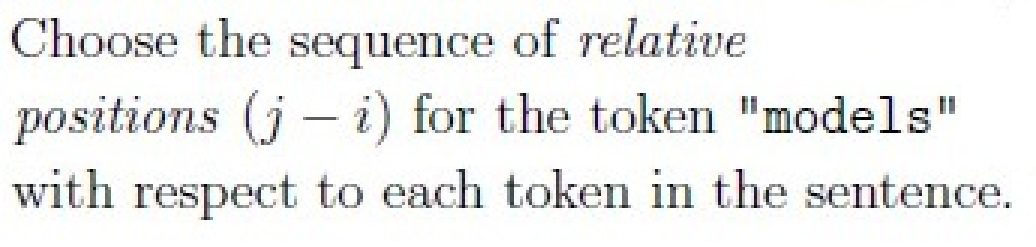
Figure 21. Prompt for relative positions sequence for token models
Options
A.
(0, 1, 2, 3, 4)
Source option ID: 6406534756338
Label added for presentation.
B.
(-1, 0, 1, 2, 3)
Source option ID: 6406534756339
Label added for presentation.
C.
(-2, -1, 0, 1, 2)
Source option ID: 6406534756340
Label added for presentation.
D.
(-3, -2, -1, 0, 1)
Source option ID: 6406534756341
Label added for presentation.
Correct answer: (-2, -1, 0, 1, 2)
Source evidence: [{"page": 11, "bbox": [119.02, 39.14, 131.02, 51.14], "type": "green source option", "detail": "Green marked option 6406534756340 (C)"}]
Question 152
Question ID: 6406531422527
Portal container ID: 6406531422525
Type: MCQ · Marks: 1
PDF pages: 11
Shared context: ctx-151-154
Choose the value of \(p_{j-i}\) for the current token “model” and other token “large”.
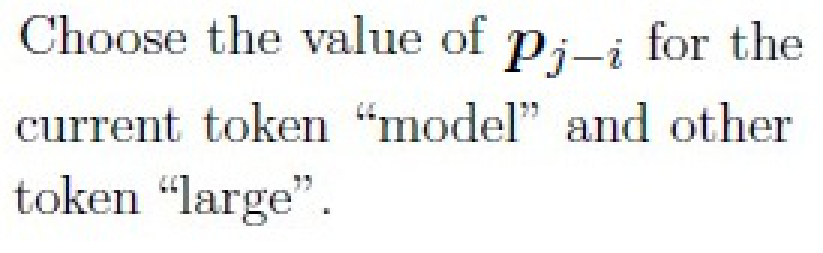
Figure 22. Prompt for positional embedding vector p_{j-i} for current token model and other token large
Options
A.
[0.2, 0.2, 0.2, 0.2]

Figure 23. Option A vector [0.2, 0.2, 0.2, 0.2]
Source option ID: 6406534756342
Label added for presentation.
B.
[-0.2, -0.2, -0.2, -0.2]

Figure 24. Option B vector [-0.2, -0.2, -0.2, -0.2]
Source option ID: 6406534756343
Label added for presentation.
C.
[-0.3, -0.3, -0.3, -0.3]

Figure 25. Option C vector [-0.3, -0.3, -0.3, -0.3]
Source option ID: 6406534756344
Label added for presentation.
D.
[-0.4, -0.4, -0.4, -0.4]

Figure 26. Option D vector [-0.4, -0.4, -0.4, -0.4]
Source option ID: 6406534756345
Label added for presentation.
Correct answer: [-0.2, -0.2, -0.2, -0.2]
Source evidence: [{"page": 11, "bbox": [119.02, 295.89, 131.02, 307.89], "type": "green source option", "detail": "Green marked option 6406534756343 (B)"}]
Question 153
Question ID: 6406531422528
Portal container ID: 6406531422525
Type: SA · Marks: 3
PDF pages: 11, 12
Shared context: ctx-151-154
With a naive implementation, for each token embedding, we need a way to combine (say, addition) relative position embeddings. For token index \(i \in \{0, \dots, T-1\}\),
Using the naive formula above, compute the final combined embedding \(h_i\) for the token "language" (i.e., \(i = 1\)). Submit the sum of all the elements.
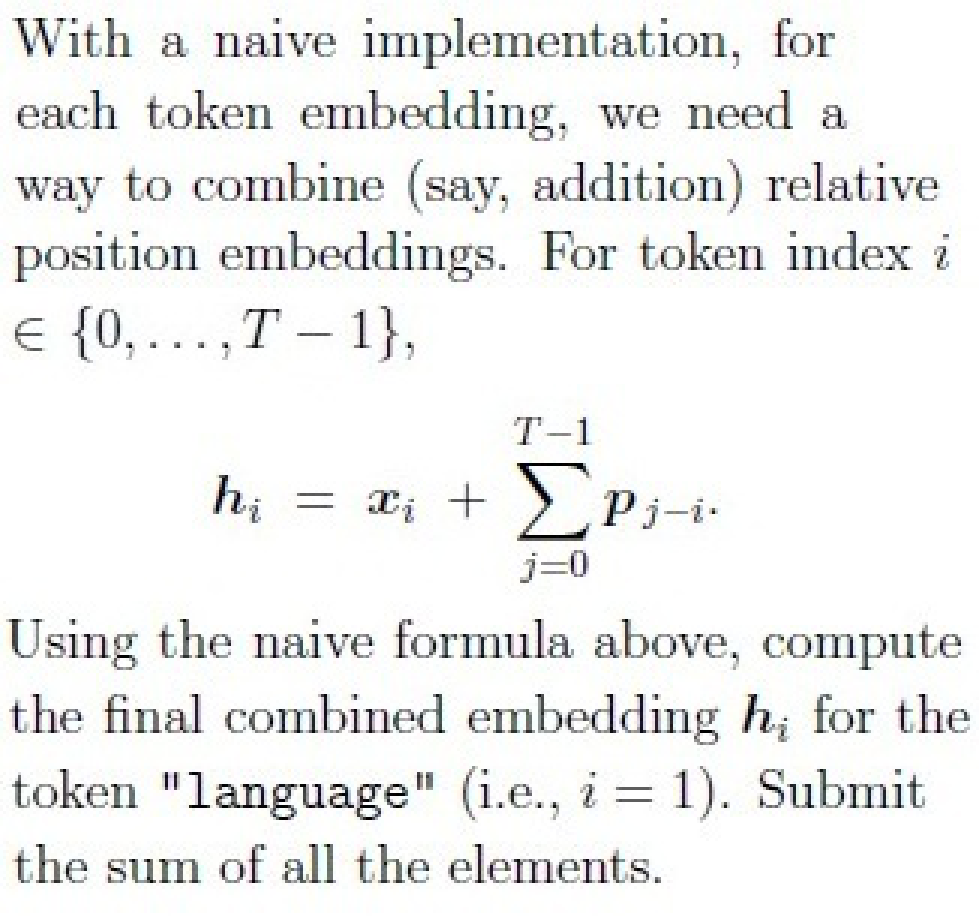
Figure 27. Prompt for combined embedding h_i calculation for token language
Correct answer: 10
Source evidence: [{"page": 12, "bbox": [22.87, 55.0, 100.0, 75.0], "type": "explicit field", "detail": "Official source Equal answer: 10"}]
Question 154
Question ID: 6406531422529
Portal container ID: 6406531422525
Type: SA · Marks: 3
PDF pages: 12
Shared context: ctx-151-154
Compute \(e_{ij}\) for the current token “models” and other token “large”.
Assume \(W_Q = I\) and \(W_K = 2I\) where \(I\) is an identity matrix. Answer \(e_{ij}\) correct upto 1 digit after the decimal.
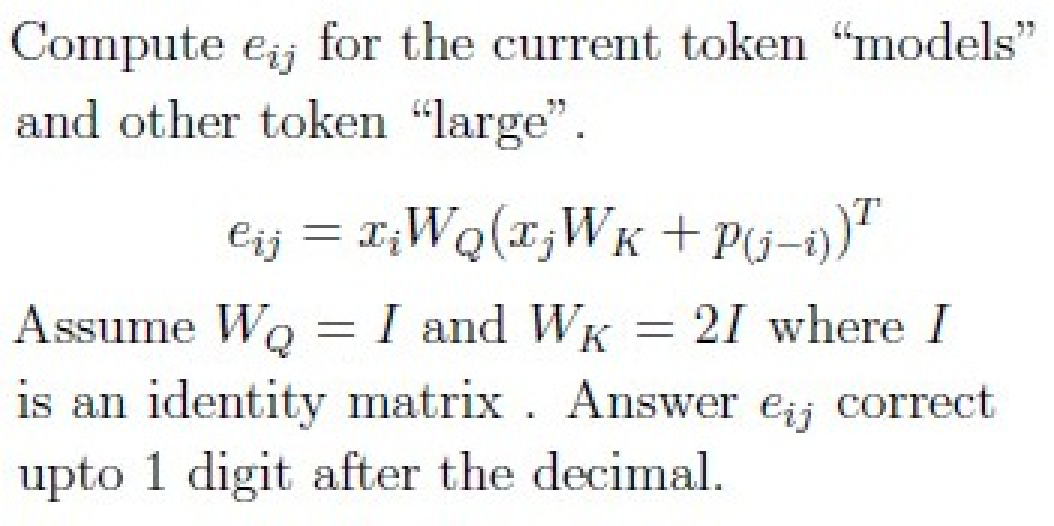
Figure 28. Prompt for relative attention score e_{ij} calculation for tokens models and large
Correct answer: 21.3 to 22.0
Source evidence: [{"page": 12, "bbox": [22.87, 405.0, 150.0, 430.0], "type": "explicit field", "detail": "Official source Range answer: 21.3 to 22.0"}]
Answer key
| Source question | Source identity | Correct answer | PDF pages |
|---|---|---|---|
| 138 | 6406531422514 | [moo, nlight] | 2 |
| 139 | 6406531422515 | (a) : Strided Local Attention, (b) : Local + Global Attention, (c) : Random Local Attention, (d) : Sparse Block Attention | 3 |
| 140 | 6406531422516 | They help handle rare words by breaking them into smaller units.; They can reduce the overall vocabulary size compared to word-level tokenizers. | 4 |
| 141 | 6406531422517 | Method A: Greedy decoding; Method B: Top-P sampling with p = 0.9; Method C: Top-P sampling with p = 0.5 and high temperature T = 1.5 | 4 |
| 142 | 6406531422518 | Number of transformer layers; Learning rate schedule; Vocabulary size; Type of normalization (e.g., LayerNorm) | 4 |
| 143 | 6406531422519 | Top-k keeps only the k most probable tokens before sampling.; Top-p dynamically chooses the smallest set of tokens whose cumulative probability exceeds p. | 5 |
| 144 | 6406531422520 | Lowercasing text (for uncased models); Splitting into subword units using BPE or WordPiece; Adding position indices for each token | 5 |
| 145 | 6406531422521 | 0.38 to 0.44 | 5, 6 |
| 146 | 6406531422523 | 0.98 to 1.06 | 6, 7 |
| 147 | 6406531422524 | 0.04 to 0.10 | 7 |
| 148 | 6406531422531 | \(\pi = (0, 3, 1, 2, 4)\) | 8, 9 |
| 149 | 6406531422532 | 120 | 9 |
| 150 | 6406531422533 | 80 | 9 |
| 151 | 6406531422526 | (-2, -1, 0, 1, 2) | 10, 11 |
| 152 | 6406531422527 | [-0.2, -0.2, -0.2, -0.2] | 11 |
| 153 | 6406531422528 | 10 | 11, 12 |
| 154 | 6406531422529 | 21.3 to 22.0 | 12 |
Extraction notes
Status: verified
Count reconciliation: Section 6 declares 12 portal questions and 40 section marks. The 12 portal containers comprise: 1 administrative confirmation question (Q137, 0 marks, excluded), 8 standalone questions (Q138: 2 marks, Q139: 2 marks, Q140: 3 marks, Q141: 3 marks, Q142: 3 marks, Q143: 3 marks, Q144: 3 marks, Q145: 3 marks; total standalone = 22 marks), and 3 comprehension portal containers (Q146-147: 5 marks; Q148-150: 5 marks; Q151-154: 8 marks; comprehension subquestions total 18 marks). Total academic questions = 8 standalone + 9 comprehension subquestions = 17 academic questions. Total marks = 22 + 18 = 40 marks, exactly reconciling the declared section marks and question containers.
Excluded source entries:
- {"classification": "subject-confirmation", "page": 1, "bbox": [22.87, 689.2, 542.5, 841.89], "reason": "Administrative subject confirmation asking candidate to confirm subject and cross check hall ticket", "identity": "137"}