LLM — da5004_2025T3_Q2_NA
Source: da5004_2025T3_Q2_NA.pdf · Academic questions: 22 · Separately counted children: 0
Provenance: Large_Language_Models/da5004_2025T3_Q2_NA.pdf · SHA-256 f8bb8de26f2feee9023f2ae63201ebfbc33cfeaec70b9963fa796f253e248002
Scope: Large Language Models (LLM) section (Section 6, Section Id: 640653121911) spanning page 1 at y=443.10 to page 13 at y=842.00. Preceding Section 5 tail content at top of page 1 (y=0 to y=443.10, including GMM question 105 and preceding options) is excluded as out of subject scope.
Questions
Shared context 107 to 109
Question ID: 6406531815698
Portal container ID: 6406531815698
Type: Comprehension
PDF pages: 2
A corpus containing the following five words is tokenized using WordPiece algorithm:
| Word | Frequency |
|---|---|
play <w> |
3 |
played <w> |
2 |
pray <w> |
1 |
prey <w> |
5 |
reply <w> |
4 |
| Total | 15 |
Table 1: Word frequencies in the corpus before any merges
The initial character-level vocabulary is:
\(V_0 = \{\text{'p'}, \text{'l'}, \text{'r'}, \text{'a'}, \text{'y'}, \text{'d'}, \text{'e'}, \text{<w>}\}\).
Based on the above data, answer the given subquestions.
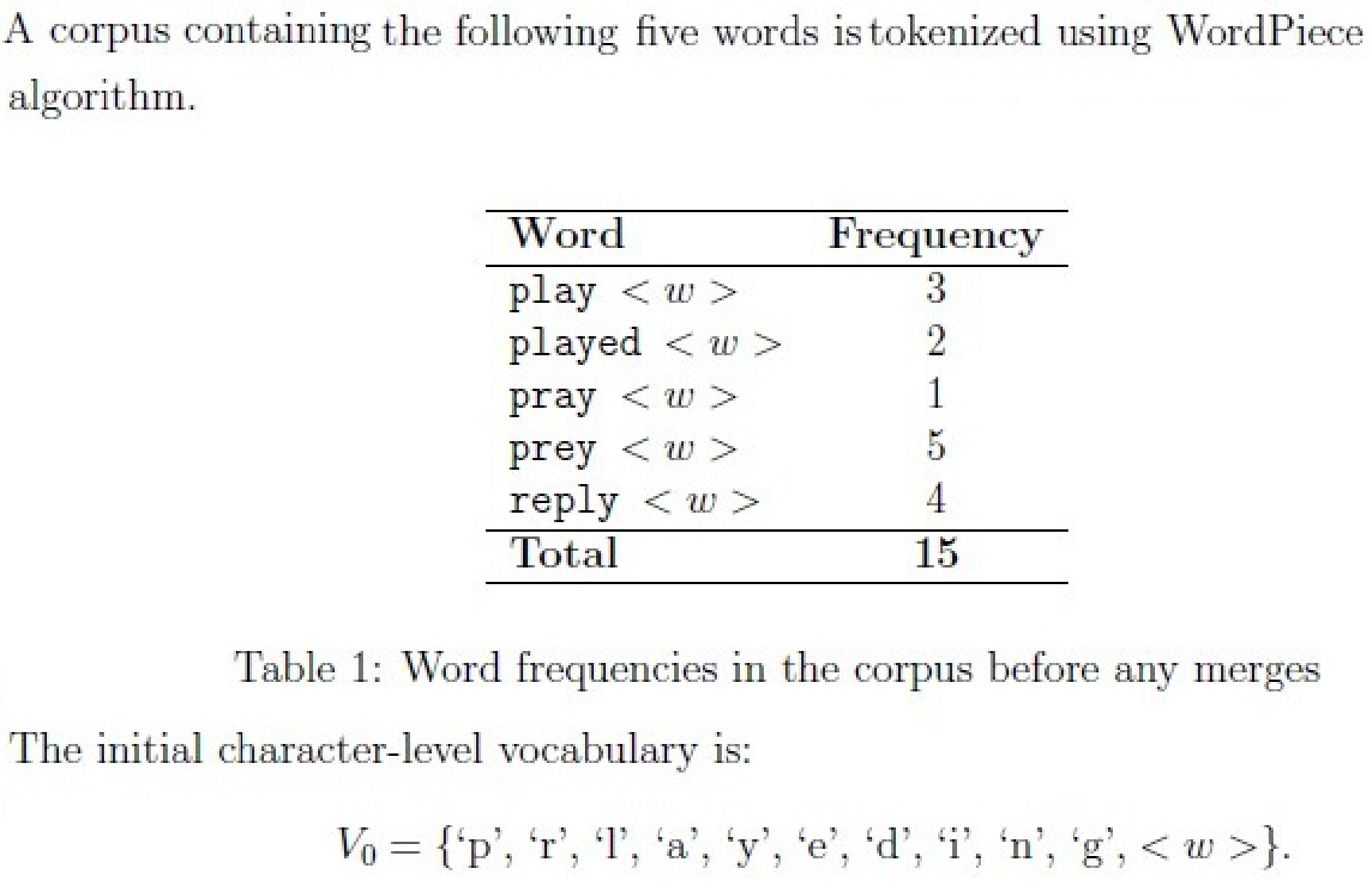
Figure 1. WordPiece algorithm corpus word frequencies table and initial character vocabulary
Question 107
Question ID: 6406531815699
Type: SA · Marks: 2
PDF pages: 3
Shared context: ctx-107-109
What is the score generated for the pair ['p', 'a'] before the first merge?
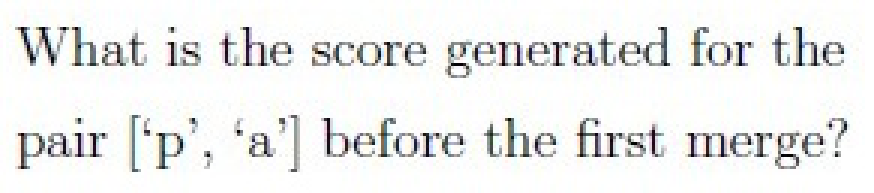
Figure 2. Question 107 prompt: score generated for pair ['p', 'a'] before first merge
Correct answer: 0
Source evidence: [{"page": 3, "bbox": [22.9, 219.0, 132.2, 235.3], "type": "numeric-answer", "detail": "Possible Answers : 0"}]
Question 108
Question ID: 6406531815700
Type: SA · Marks: 2
PDF pages: 3
Shared context: ctx-107-109
What will be the score generated for the pair ['p', 'l'] before the first merge?
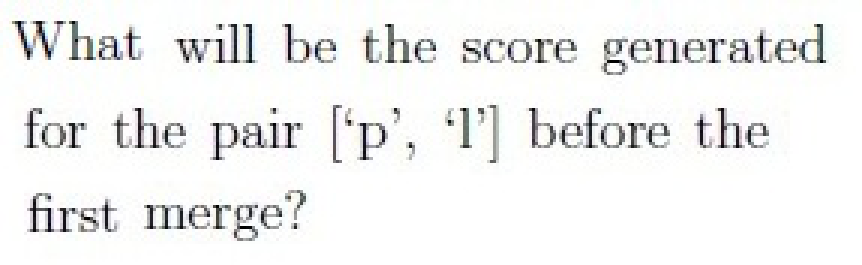
Figure 3. Question 108 prompt: score generated for pair ['p', 'l'] before first merge
Correct answer: 0.06 to 0.07
Source evidence: [{"page": 3, "bbox": [22.9, 508.3, 132.2, 524.6], "type": "numeric-answer", "detail": "Possible Answers : 0.06 to 0.07"}]
Question 109
Question ID: 6406531815701
Type: MCQ · Marks: 3
PDF pages: 3, 4
Shared context: ctx-107-109
Which token will be generated in the first merge?
Options
A.
'pl'

Figure 4. Option A: 'pl'
Source option ID: 6406535903010
B.
'la'

Figure 5. Option B: 'la'
Source option ID: 6406535903011
C.
'ay'

Figure 6. Option C: 'ay'
Source option ID: 6406535903012
D.
're'

Figure 7. Option D: 're'
Source option ID: 6406535903013
Correct answer: 'la'
Source evidence: [{"page": 3, "bbox": [23.62, 731.87, 131.02, 748.37], "type": "marked-options", "detail": "Green checkmark option 6406535903011"}]
Question 110
Question ID: 6406531815702
Type: SA · Marks: 2
PDF pages: 4
A study is comparing three architectures, all trained with the same compute budget:
• Model A (Encoder-Decoder): A 12-layer encoder and a 12-layer decoder with separate parameters. Its total size is 220 million parameters.
• Model B (Decoder-Only): A 24-layer decoder-only model. Its total size is also approximately 220 million parameters.
• Model C (Shared Enc-Dec): A 12-layer encoder and a 12-layer decoder where the parameters are shared (\(W_{\text{enc}} = W_{\text{dec}}\)).
Assuming that the 12-layer encoder and 12-layer decoder in Model A have an equal number of parameters, what is the approximate total parameter count (in millions) of Model C?
Correct answer: 110
Source evidence: [{"page": 4, "bbox": [22.9, 442.2, 132.2, 458.5], "type": "numeric-answer", "detail": "Possible Answers : 110"}]
Question 111
Question ID: 6406531815703
Type: SA · Marks: 2
PDF pages: 4, 5
Consider a text corpus being processed using the Byte Pair Encoding (BPE) algorithm. The initial vocabulary contains 26 tokens (representing characters), and the corpus contains a total of 1000 tokens.
During BPE training, the following merge operations are performed. Each merge combines all occurrences of a particular token pair into a single new token, reducing the total token count accordingly:
- Merge 1: Pair ('t', 'h') appears 24 times → merged into new token 'th'
- Merge 2: Pair ('i', 'n') appears 18 times → merged into new token 'in'
- Merge 3: Pair ('th', 'e') appears 10 times → merged into new token 'the'
- Merge 4: Pair ('i', 's') appears 8 times → merged into new token 'is'
What is the final total number of tokens in the corpus after all 4 merges are completed?
Correct answer: 940
Source evidence: [{"page": 5, "bbox": [22.9, 219.0, 132.2, 235.3], "type": "numeric-answer", "detail": "Possible Answers : 940"}]
Question 112
Question ID: 6406531815704
Type: SA · Marks: 2
PDF pages: 5
If Byte-Pair Encoding (BPE) starts with 100 unique characters and performs 10000 merge operations, what will be the final vocabulary size?
Correct answer: 10100
Source evidence: [{"page": 5, "bbox": [22.9, 442.2, 132.2, 458.5], "type": "numeric-answer", "detail": "Possible Answers : 10100"}]
Question 113
Question ID: 6406531815705
Type: SA · Marks: 2
PDF pages: 5, 6
In a 4-token sequence, a Transformer is calculating the attention for the third Token. Its Query vector (\(q_3\)) must be compared against the Key vectors (\(k_1, k_2, k_3, k_4\)) of all tokens. The Causal LM mask is applied to the raw scores before the softmax function. The raw dot-product scores are:
• \(q_3 \cdot k_1 = 1.8\)
• \(q_3 \cdot k_2 = 0.5\)
• \(q_3 \cdot k_3 = 2.0\)
• \(q_3 \cdot k_4 = 1.2\)
After the Causal LM mask and the subsequent softmax function are applied, what will be the final attention probability assigned to Token 4?
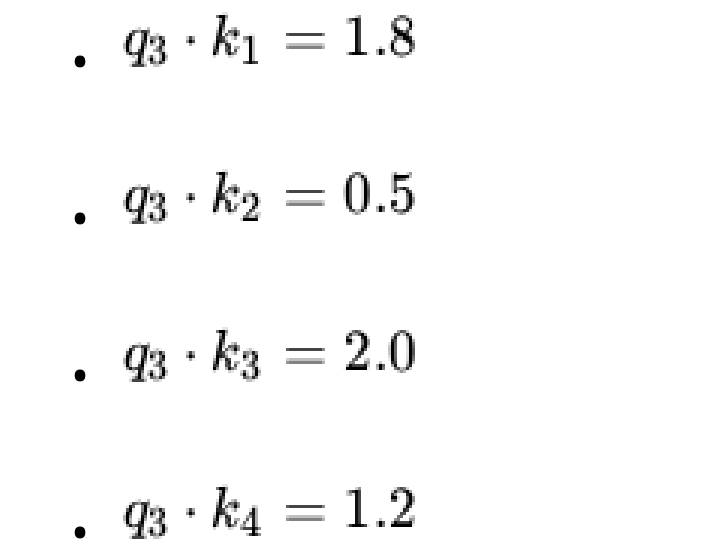
Figure 8. Question 113 dot-product raw scores for Token 3 against Key vectors
Correct answer: 0
Source evidence: [{"page": 6, "bbox": [22.9, 361.6, 132.2, 377.9], "type": "numeric-answer", "detail": "Possible Answers : 0"}]
Question 114
Question ID: 6406531815706
Type: MSQ · Marks: 3
PDF pages: 6
Which of the following is/are primarily multilingual datasets? Select all that apply.
Options
A.
Sangraha
Source option ID: 6406535903018
B.
DOLMA
Source option ID: 6406535903019
C.
BookCorpus
Source option ID: 6406535903020
D.
CommonCrawl
Source option ID: 6406535903021
Correct answer: Sangraha; CommonCrawl
Source evidence: [{"page": 6, "bbox": [23.62, 484.85, 131.02, 501.17], "type": "marked-options", "detail": "Green checkmark option 6406535903018"}, {"page": 6, "bbox": [23.62, 608.69, 131.02, 625.01], "type": "marked-options", "detail": "Green checkmark option 6406535903021"}]
Question 115
Question ID: 6406531815707
Type: MSQ · Marks: 2
PDF pages: 6, 7
Which decoding method ensures the same response every time for a given prompt (assuming no randomness in model weights)? Select all that apply.
Options
A.
Top-k with k = 3, temperature > 1
Source option ID: 6406535903022
B.
Top-k with k = 3, temperature = 1
Source option ID: 6406535903023
C.
Top-p with p = 0.2, Temperature > 1
Source option ID: 6406535903024
D.
Top-p with p = 0.2, Temperature = 1
Source option ID: 6406535903025
E.
Beam Search with beam-size = 5
Source option ID: 6406535903026
F.
Beam Search with beam-size = 1
Source option ID: 6406535903027
Correct answer: Beam Search with beam-size = 5; Beam Search with beam-size = 1
Source evidence: [{"page": 7, "bbox": [23.62, 237.76, 131.02, 254.08], "type": "marked-options", "detail": "Green checkmark option 6406535903026"}, {"page": 7, "bbox": [23.62, 274.9, 131.02, 291.22], "type": "marked-options", "detail": "Green checkmark option 6406535903027"}]
Question 116
Question ID: 6406531815708
Type: MCQ · Marks: 2
PDF pages: 7
A data preprocessing pipeline removed data from the Common Crawl snapshot in three stages: 50% after language identification, 24% of the remaining after quality filtering, and 12% of what remained after deduplication. What percentage of the original Common Crawl snapshot remains in the final dataset? (Choose the closest number)
Options
A.
21%
Source option ID: 6406535903028
B.
66%
Source option ID: 6406535903029
C.
33%
Source option ID: 6406535903030
D.
50%
Source option ID: 6406535903031
Correct answer: 33%
Source evidence: [{"page": 7, "bbox": [23.62, 497.02, 131.02, 513.34], "type": "marked-options", "detail": "Green checkmark option 6406535903030"}]
Question 117
Question ID: 6406531815709
Type: MCQ · Marks: 3
PDF pages: 7, 8
A data preprocessing pipeline needs to apply the following steps on raw Common Crawl data:
- Fuzzy deduplication (using MinHash)
- Toxicity detection (using ML-based classifiers)
-
PII removal (using regex patterns)
-
Exact deduplication (using hash-based matching)
- Quality filtering (using several rule-based heuristics)
- URL Filtering
What is the most efficient sequence to apply these steps?
Options
A.
6 → 4 → 1 → 5 → 2 → 3
Source option ID: 6406535903032
B.
1 → 4 → 2 → 5 → 3 → 6
Source option ID: 6406535903033
C.
5 → 6 → 4 → 1 → 2 → 3
Source option ID: 6406535903034
D.
4 → 5 → 6 → 1 → 3 → 2
Source option ID: 6406535903035
Correct answer: 6 → 4 → 1 → 5 → 2 → 3
Source evidence: [{"page": 8, "bbox": [23.62, 187.8, 131.02, 205.8], "type": "marked-options", "detail": "Green checkmark option 6406535903032"}]
Question 118
Question ID: 6406531815710
Type: MCQ · Marks: 4
PDF pages: 8, 9
Consider the following four pre-training scenarios for four different language models:
• Model A: Given "The cat sat on the __", predict "mat" using both left and right context.
• Model B: Given "The cat sat", predict the next token "on".
• Model C: Given corrupted input "The
• Model D: Given "
(Here, the symbols <X>, <Y>, and <extra_id_0>, <extra_id_1> represent different kinds of placeholder tokens used by some language models during pre-training.)
Match each scenario to the correct model:
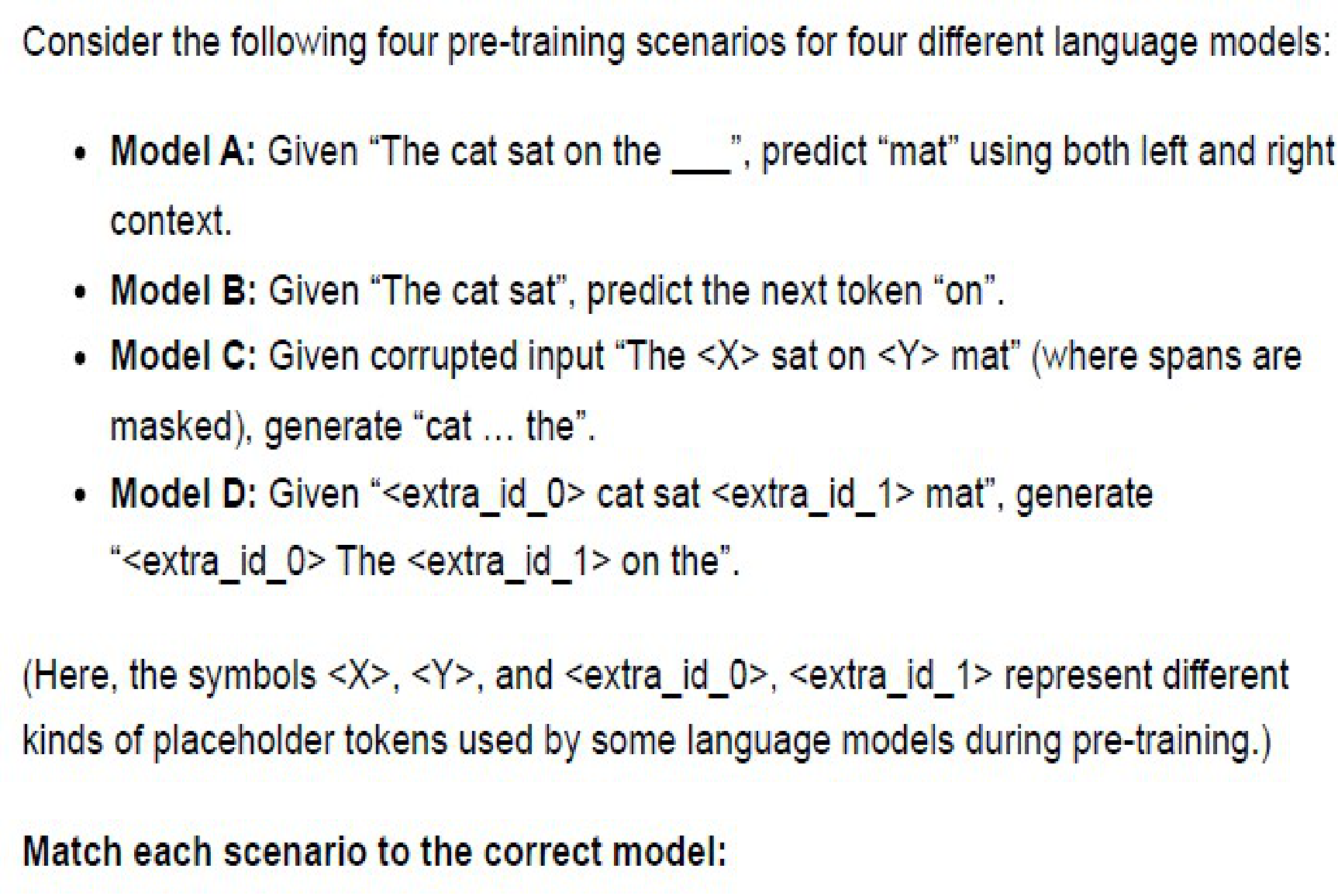
Figure 9. Question 118 pre-training scenarios for Model A, Model B, Model C, and Model D
Options
A.
A = BART, B = T5, C = BERT, D = GPT
Source option ID: 6406535903036
B.
A = T5, B = BERT, C = GPT, D = BART
Source option ID: 6406535903037
C.
A = BERT, B = GPT, C = BART, D = T5
Source option ID: 6406535903038
D.
A = BERT, B = BART, C = GPT, D = T5
Source option ID: 6406535903039
Correct answer: A = BERT, B = GPT, C = BART, D = T5
Source evidence: [{"page": 9, "bbox": [23.62, 59.14, 131.02, 75.46], "type": "marked-options", "detail": "Green checkmark option 6406535903038"}]
Question 119
Question ID: 6406531815711
Type: MCQ · Marks: 2
PDF pages: 9
Consider the scaling law:
where \(N\) = model parameters, \(D\) = training tokens, \(N_c, D_c\) = scale constants, \(\alpha_N, \alpha_D\) = scaling exponents.
A team trains an LLM and observes the following losses for their model:
- Training Loss
- Test Loss (same distribution as training)
- Test Loss (different distribution from training)
Which loss does \(L(N, D)\) represent?
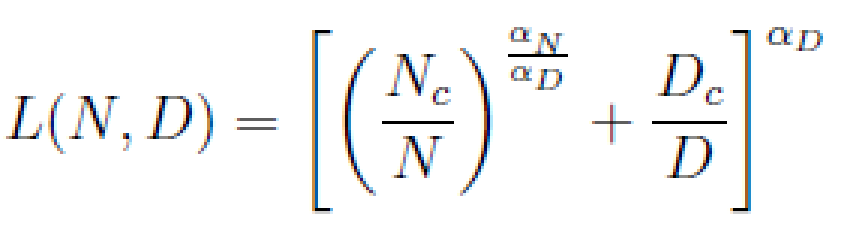
Figure 10. Question 119 scaling law loss equation L(N, D)
Options
A.
Both 2 and 3
Source option ID: 6406535903040
B.
Both 1 and 2
Source option ID: 6406535903041
C.
1 only
Source option ID: 6406535903042
D.
2 only
Source option ID: 6406535903043
Correct answer: 2 only
Source evidence: [{"page": 9, "bbox": [23.62, 690.67, 131.02, 706.99], "type": "marked-options", "detail": "Green checkmark option 6406535903043"}]
Question 120
Question ID: 6406531815712
Type: MCQ · Marks: 3
PDF pages: 9, 10
A company is building a sentiment analysis system for customer reviews. They have two options:
Option A: Fine-tune BERT for sentiment classification
Option B: Fine-tune BART for sentiment classification
Their requirements are:
• Process 10,000 reviews per minute
• Deploy on cost-effective cloud instances (memory-constrained)
• Simple positive/negative/neutral classification
• No need for explanations or text generation
Which statement best describes the trade-offs they should consider?
Options
A.
BART is expected to provide significantly better accuracy and is worth the extra computational cost since it's pre-trained on more diverse corruption tasks.
Source option ID: 6406535903044
B.
BART is better because its decoder can verify the encoder's sentiment understanding, providing a built-in validation mechanism that improves robustness.
Source option ID: 6406535903045
C.
They should use BART's encoder only and discard the decoder, which will give them the same efficiency as BERT with better pre-training.
Source option ID: 6406535903046
D.
BERT is more suitable because sentiment classification only requires understanding (encoding), not generation (decoding), making it faster and more memory-efficient without sacrificing accuracy.
Source option ID: 6406535903047
Correct answer: BERT is more suitable because sentiment classification only requires understanding (encoding), not generation (decoding), making it faster and more memory-efficient without sacrificing accuracy.
Source evidence: [{"page": 10, "bbox": [23.62, 384.13, 131.02, 400.45], "type": "marked-options", "detail": "Green checkmark option 6406535903047"}]
Question 121
Question ID: 6406531815713
Type: MCQ · Marks: 2
PDF pages: 10
Which of the following statements best describes the fundamental difference between the unsupervised pre-training objective used in T5 (span corruption) and its supervised fine-tuning objectives such as translation or summarization?
Options
A.
The pre-training objective is a denoising task, while the fine-tuning objective is a Causal Language Model (CLM) task.
Source option ID: 6406535903048
B.
There is no fundamental difference; both are treated as "text-to-text" tasks, where the model is trained to generate a target sequence given an input sequence.
Source option ID: 6406535903049
C.
The pre-training objective trains the model to fill in [MASK] tokens, while the fine-tuning objective trains the model to generate text from a [CLS] token.
Source option ID: 6406535903050
D.
The pre-training objective trains the entire encoder-decoder, while the fine-tuning objective freezes the encoder and only trains the decoder.
Source option ID: 6406535903051
Correct answer: There is no fundamental difference; both are treated as "text-to-text" tasks, where the model is trained to generate a target sequence given an input sequence.
Source evidence: [{"page": 10, "bbox": [23.62, 685.75, 131.02, 702.07], "type": "marked-options", "detail": "Green checkmark option 6406535903049"}]
Question 122
Question ID: 6406531815714
Type: MCQ · Marks: 2
PDF pages: 11
An original document is:
"The quick brown fox jumps over the lazy dog."
A corrupted input for pre-training is:
"The quick
What is the target output for pre-training?
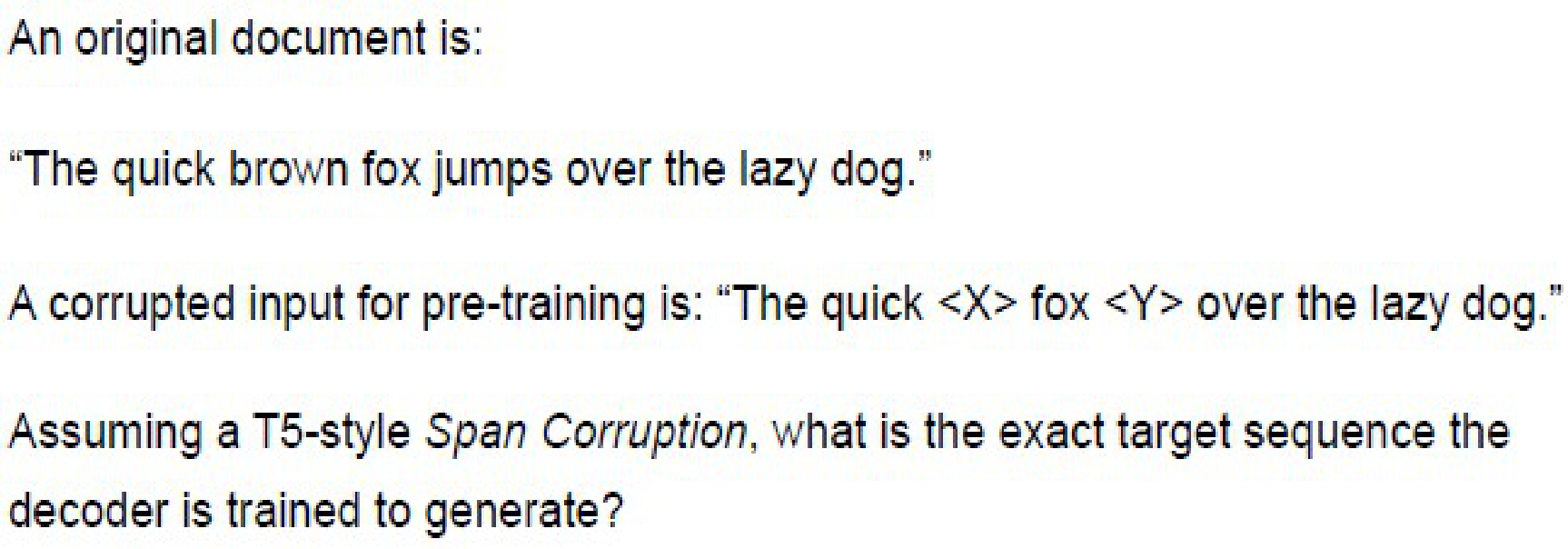
Figure 11. Question 122 corrupted document input and target output problem
Options
A.
brown jumps
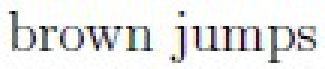
Figure 12. Option A: brown jumps
Source option ID: 6406535903052
B.
The quick brown fox jumps over the lazy dog.

Figure 13. Option B: The quick brown fox jumps over the lazy dog.
Source option ID: 6406535903053
C.

Figure 14. Option C:
Source option ID: 6406535903054
D.
brown

Figure 15. Option D: brown
Source option ID: 6406535903055
Correct answer:
Source evidence: [{"page": 11, "bbox": [23.62, 402.07, 131.02, 418.39], "type": "marked-options", "detail": "Green checkmark option 6406535903054"}]
Question 123
Question ID: 6406531815715
Type: MCQ · Marks: 2
PDF pages: 11, 12
A Transformer model is designed to handle both understanding and generation tasks. When given the input sequence \([A, B, C, D, E]\), its attention mask allows the following:
• When processing \(A\) or \(B\), the model can see both \(A\) and \(B\).
• When processing \(C\), the model can see \(A, B\) and \(C\) but not \(D, E\).
This attention scheme is the defining characteristic of which training objective?
Options
A.
Causal Language Modeling (CLM)
Source option ID: 6406535903056
B.
Masked Language Modeling (MLM)
Source option ID: 6406535903057
C.
Denoising Objective (like BART)
Source option ID: 6406535903058
D.
Prefix Language Modeling (Prefix-LM)
Source option ID: 6406535903059
Correct answer: Prefix Language Modeling (Prefix-LM)
Source evidence: [{"page": 12, "bbox": [23.62, 59.14, 131.02, 75.46], "type": "marked-options", "detail": "Green checkmark option 6406535903059"}]
Question 124
Question ID: 6406531815716
Type: MCQ · Marks: 2
PDF pages: 12
BART is an encoder-decoder model. During its denoising pre-training, what is fed as input to the decoder?
Options
A.
The corrupted text from the encoder.
Source option ID: 6406535903060
B.
The original, uncorrupted text (shifted right by one token).
Source option ID: 6406535903061
C.
A sequence of [MASK] tokens, one for each original word.
Source option ID: 6406535903062
D.
Nothing; the decoder starts with only the < s > token.
Source option ID: 6406535903063
Correct answer: The original, uncorrupted text (shifted right by one token).
Source evidence: [{"page": 12, "bbox": [23.62, 295.48, 131.02, 311.8], "type": "marked-options", "detail": "Green checkmark option 6406535903061"}]
Question 125
Question ID: 6406531815717
Type: MCQ · Marks: 2
PDF pages: 12
A WordPiece vocabulary contains ['play'], ['##er'], ['player'] and ['##s']. How will the word 'players' be tokenized?

Figure 16. Question 125 WordPiece vocabulary and tokenization of players
Options
A.
['play', '##er', '##s']

Figure 17. Option A: ['play', '##er', '##s']
Source option ID: 6406535903064
B.
['player', '##s']
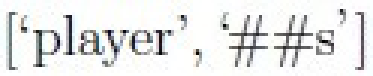
Figure 18. Option B: ['player', '##s']
Source option ID: 6406535903065
C.
['players']
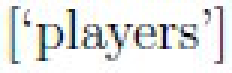
Figure 19. Option C: ['players']
Source option ID: 6406535903066
D.
['p', 'l', 'a', 'y', '##s']

Figure 20. Option D: ['p', 'l', 'a', 'y', '##s']
Source option ID: 6406535903067
Correct answer: ['player', '##s']
Source evidence: [{"page": 12, "bbox": [23.62, 616.78, 131.02, 633.1], "type": "marked-options", "detail": "Green checkmark option 6406535903065"}]
Question 126
Question ID: 6406531815718
Type: MCQ · Marks: 2
PDF pages: 13
How does SentencePiece handle whitespace characters (like spaces) during tokenization?
Options
A.
It only keeps whitespace that appears next to punctuation marks.
Source option ID: 6406535903068
B.
It discards all whitespace as a pre-processing step.
Source option ID: 6406535903069
C.
It replaces all whitespace with a special [SPACE] token.
Source option ID: 6406535903070
D.
It treats whitespace as part of the text stream and encodes it, often using a symbol like (underscore).
Source option ID: 6406535903071
Correct answer: It treats whitespace as part of the text stream and encodes it, often using a symbol like (underscore).
Source evidence: [{"page": 13, "bbox": [23.62, 176.56, 131.02, 192.88], "type": "marked-options", "detail": "Green checkmark option 6406535903071"}]
Question 127
Question ID: 6406531815719
Type: MCQ · Marks: 2
PDF pages: 13
For a layer with 512 features, how many learnable parameters do BatchNorm and LayerNorm have?
Options
A.
BatchNorm: 512, LayerNorm: 512
Source option ID: 6406535903072
B.
BatchNorm: 1024, LayerNorm: 512
Source option ID: 6406535903073
C.
BatchNorm: 512, LayerNorm: 1024
Source option ID: 6406535903074
D.
BatchNorm: 1024, LayerNorm: 1024
Source option ID: 6406535903075
Correct answer: BatchNorm: 1024, LayerNorm: 1024
Source evidence: [{"page": 13, "bbox": [23.62, 497.54, 131.02, 513.86], "type": "marked-options", "detail": "Green checkmark option 6406535903075"}]
Question 128
Question ID: 6406531815720
Type: MCQ · Marks: 2
PDF pages: 13
In a standard Encoder-Decoder Transformer, where do the Query \(Q\), Key \(K\), and Value \(V\) inputs for the Decoder's Cross-Attention sub-layer come from?
Options
A.
\(Q\) comes from the decoder's previous sub-layer; \(K\) and \(V\) come from the final hidden states of the encoder.
Source option ID: 6406535903076
B.
\(Q\) comes from the final hidden states of the encoder; \(K\) and \(V\) come from the decoder's previous sub-layer.
Source option ID: 6406535903077
Correct answer: \(Q\) comes from the decoder's previous sub-layer; \(K\) and \(V\) come from the final hidden states of the encoder.
Source evidence: [{"page": 13, "bbox": [23.62, 726.43, 131.02, 742.75], "type": "marked-options", "detail": "Green checkmark option 6406535903076"}]
Answer key
| Source question | Source identity | Correct answer | PDF pages |
|---|---|---|---|
| 107 | 6406531815699 | 0 | 3 |
| 108 | 6406531815700 | 0.06 to 0.07 | 3 |
| 109 | 6406531815701 | 'la' | 3, 4 |
| 110 | 6406531815702 | 110 | 4 |
| 111 | 6406531815703 | 940 | 4, 5 |
| 112 | 6406531815704 | 10100 | 5 |
| 113 | 6406531815705 | 0 | 5, 6 |
| 114 | 6406531815706 | Sangraha; CommonCrawl | 6 |
| 115 | 6406531815707 | Beam Search with beam-size = 5; Beam Search with beam-size = 1 | 6, 7 |
| 116 | 6406531815708 | 33% | 7 |
| 117 | 6406531815709 | 6 → 4 → 1 → 5 → 2 → 3 | 7, 8 |
| 118 | 6406531815710 | A = BERT, B = GPT, C = BART, D = T5 | 8, 9 |
| 119 | 6406531815711 | 2 only | 9 |
| 120 | 6406531815712 | BERT is more suitable because sentiment classification only requires understanding (encoding), not generation (decoding), making it faster and more memory-efficient without sacrificing accuracy. | 9, 10 |
| 121 | 6406531815713 | There is no fundamental difference; both are treated as "text-to-text" tasks, where the model is trained to generate a target sequence given an input sequence. | 10 |
| 122 | 6406531815714 | 11 | |
| 123 | 6406531815715 | Prefix Language Modeling (Prefix-LM) | 11, 12 |
| 124 | 6406531815716 | The original, uncorrupted text (shifted right by one token). | 12 |
| 125 | 6406531815717 | ['player', '##s'] | 12 |
| 126 | 6406531815718 | It treats whitespace as part of the text stream and encodes it, often using a symbol like (underscore). | 13 |
| 127 | 6406531815719 | BatchNorm: 1024, LayerNorm: 1024 | 13 |
| 128 | 6406531815720 | \(Q\) comes from the decoder's previous sub-layer; \(K\) and \(V\) come from the final hidden states of the encoder. | 13 |
Extraction notes
Status: verified
Count reconciliation: Section 6 declares 21 portal questions and 50 section marks. The 21 portal containers comprise: 1 administrative confirmation question (Q106, 0 marks, excluded), 1 comprehension portal container (Question Id 6406531815698, containing Q107: 2 marks, Q108: 2 marks, Q109: 3 marks; total comprehension = 7 marks), and 19 standalone questions (Q110: 2 marks, Q111: 2 marks, Q112: 2 marks, Q113: 2 marks, Q114: 3 marks, Q115: 2 marks, Q116: 2 marks, Q117: 3 marks, Q118: 4 marks, Q119: 2 marks, Q120: 3 marks, Q121: 2 marks, Q122: 2 marks, Q123: 2 marks, Q124: 2 marks, Q125: 2 marks, Q126: 2 marks, Q127: 2 marks, Q128: 2 marks; total standalone = 43 marks). Total academic questions = 3 comprehension subquestions + 19 standalone questions = 22 academic questions. Total marks = 7 + 43 = 50 marks, exactly reconciling the declared section marks (50 marks) and declared portal containers (1 confirmation + 1 comprehension container + 19 standalone = 21 portal questions).
- Question 106 is a 0-mark administrative subject confirmation question, excluded semantically from academic count.
- Questions 107 to 109 are governed by Comprehension container 6406531815698 (Table 1: Word frequencies in the corpus before any merges for WordPiece tokenization).
- Question 128 has 2 printed options in the source PDF.
- Mathematical formulas and tables with raster sources have been transcribed with verified exact values and accompanied by 288 DPI source crops.
Excluded source entries:
- {"classification": "out-of-scope-tail", "page": 1, "bbox": [20.62, 17.5, 500.0, 420.0], "reason": "Tail of preceding Section 5 answer evaluation and GMM short answer question 105 (3 marks) appearing above Section 6 LLM header", "identity": "section-5-tail"}
- {"classification": "subject-confirmation", "page": 2, "bbox": [22.87, 161.0, 580.0, 360.0], "reason": "Administrative subject confirmation asking candidate to confirm subject and cross check hall ticket", "identity": "106"}